
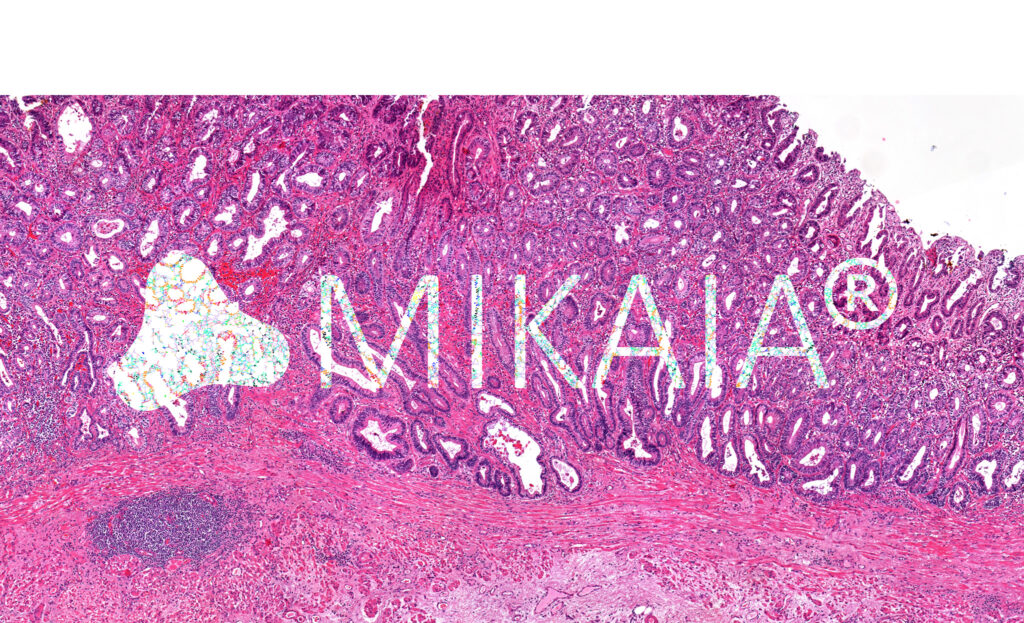
AI-Driven Digital Pathology for Whole-Brain Analysis
PanoBrain and MIKAIA together create a powerful pipeline for quantitative brain pathology: automated high-throughput scanning with vendor-agnostic, AI-powered image analysis. Where PanoBrain delivers atlas-registered whole-brain datasets at speed, MIKAIA brings flexible deep learning tools that adapt to any staining protocol, tissue type, or research question without requiring custom software development.
Why Combine PanoBrain with MIKAIA?
PanoBrain’s built-in Panolyzer software provides atlas registration and basic cell counting, but preclinical and translational neuroscience increasingly demands analysis workflows that go beyond what any single instrument’s software can offer. MIKAIA fills this gap with a modular, AI-first approach:
- Vendor-agnostic design: MIKAIA ingests standard image formats from any scanner, including PanoBrain TIFF output, with no proprietary format lock-in
- AI Author App: Build custom deep learning models for your specific staining protocols and tissue morphology without writing code
- H&E and IHC analysis: Quantify neurodegeneration markers, amyloid plaques, tau tangles, and inflammatory infiltrates on PanoBrain brightfield scans
- Multiplex fluorescence: Analyze multi-channel fluorescence data from PanoBrain with trainable segmentation and classification models
The Workflow: Scan, Register, Train, Analyze
1. High-Throughput Acquisition (PanoBrain)
PanoBrain automates the entire scanning pipeline: intelligent tissue detection, multi-channel fluorescence or brightfield acquisition, seamless stitching, and adaptive autofocus for thick brain sections. Batch processing enables cohort-scale studies with consistent quality across hundreds of sections.
2. Atlas Context (Panolyzer)
Each scanned section receives standardized anatomical coordinates through automatic Allen Brain Atlas registration. This spatial context carries through to MIKAIA analysis, enabling region-specific quantification across standardized brain areas.
3. Custom AI Model Development (MIKAIA AI Author)
MIKAIA AI Author lets researchers build deep learning models tailored to their specific tissue and staining protocols. Annotate a small training set from PanoBrain images, train a model, validate it, and deploy it across your entire dataset. This is particularly valuable for neuroscience applications where standard analysis tools often fail on the complex morphology of brain tissue.
4. Scalable Analysis (MIKAIA)
Apply trained models and built-in analysis tools across entire PanoBrain datasets:
- Tissue segmentation: Automatically delineate gray matter, white matter, and specific brain structures
- Cell detection and classification: Identify and phenotype cells across staining protocols (H&E, IHC, IF)
- Pathology quantification: Measure plaque burden, lesion area, staining intensity, and morphometric features with reproducible, automated workflows
- Batch processing: Scale analysis across entire study cohorts, matching PanoBrain’s scanning throughput
Research Applications
Neurodegenerative Disease Research
PanoBrain scans IHC-stained brain sections for amyloid-beta or phospho-tau. MIKAIA quantifies plaque density, morphology, and spatial distribution per brain region, enabling standardized comparison across treatment groups, genotypes, or disease stages with minimal operator variability.
Preclinical Drug Efficacy Studies
Batch-scan treatment and control cohorts with PanoBrain. Train a MIKAIA model on your specific pathology endpoint, then apply it uniformly across all sections. The combination of PanoBrain’s reproducible acquisition and MIKAIA’s consistent AI-driven analysis reduces the variability that undermines preclinical studies.
Histopathological Screening
For large-scale screening studies, PanoBrain’s speed (under one minute per section) combined with MIKAIA’s automated analysis creates a pipeline that can process and quantify hundreds of brain sections per day, transforming what was previously a manual, weeks-long bottleneck into an automated overnight workflow.
Technical Integration
MIKAIA is designed to be scanner-agnostic, accepting standard TIFF and whole-slide image formats that PanoBrain produces natively. No format conversion, proprietary connectors, or middleware is required. Atlas registration metadata from Panolyzer can be overlaid as region annotations in MIKAIA for region-aware analysis.
ScientiaLux provides end-to-end integration support for both platforms. As the North American partner for Meca Scientific (PanoBrain) and representative for Fraunhofer IIS (MIKAIA), we configure acquisition parameters, train initial AI models, and validate analysis workflows for your specific research application.
Explore the Technology
- PanoBrain — Automated brain slice scanning platform
- MIKAIA — AI-powered image analysis multi-tool
- PanoBrain + StrataQuest — Spatial phenotyping workflow for neuroscience
- StrataQuest Glossary — Detection, measurement, and spatial analysis concepts
- Imaging Glossary — Optical fundamentals and acquisition parameters